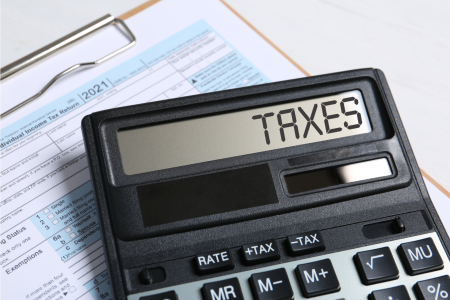

The way you pay yourself as a sole trader or limited company has a direct impact on how tax-efficient you are overall. Most freelancers choose to operate as sole traders where there’s no legal distinction between you as a person and you as a business, and submit Self Assessment tax returns to report their earnings.
Some freelancers find they benefit from registering as a limited company instead, especially if they’re aiming to be as tax-efficient as possible. In this article we’ll share some common signs as to when this might be.
Tax for sole traders
As a sole trader, there’s no legal separation between you and your business, so you pay Income Tax on your profits (whether or not you actually use them personally).
There’s no extra step needed to access what you’ve earned because they’re yours to keep, but on the other hand you can’t just leave profits in the business to defer tax the way a limited company can.
Why would this be a problem?
Freelancing can be a tempestuous career, with fluctuating income playing havoc with your cash flow. One healthy year could tip your earnings over into the higher-rate 40% tax bracket, and then the next might be quieter (or you simply want to take it easy for a while) and put you back below the threshold.
If you can’t separate yourself from your earnings, then you’ll take the tax hit in year one, and then lose it again in year two. Which leads us to limited companies.
Tax for limited companies
In contrast, a limited company is considered a separate legal entity. The company will pay Corporation Tax on its profits, but any remaining cash stays in the business until you decide to pay yourself. You only face personal tax on this money when you choose to extract it.
If you know that you’ll earn lots one year, but not so much the next, then you might decide to split your income across two years – and keep both years under the higher rate tax threshold.
There are a number of ways you can pay yourself, with most company directors choosing to pay themselves a mix of a tax-efficient director’s salary, and then dividends.
Taking a salary from a limited company
Taking a salary means:
- Your company may need to pay Employer’s National Insurance on it (and if you’re a sole director with no other staff on the payroll, you won’t be able to claim the £10,500 Employment Allowance that larger companies use to offset this cost)
- You’ll personally pay Employee NI
So, to bypass this, most directors and shareholders choose to pay themselves a small salary right up to the most tax-efficient NI boundary and then take the remainder of their income as dividends.
Taking dividends
A dividend is a payment made to a shareholder from the company’s profits after tax. You’ll still need to pay tax on the dividend, but this starts at a much lower rate than basic Income Tax. And the other bonus is that they’re not subject to National Insurance!
When might it be more tax-efficient for a freelancer to register as a limited company?
Just because there are other factors at play doesn’t mean this isn’t a big one – or even the big one. This used to be a more clear-cut answer, but tax rates and thresholds for limited companies and dividend payments have changed quite a bit, so there isn’t really a threshold at which it becomes better to form a company.
It can vary depending on:
- How much profit your business makes
- Any other income you might have
- How much your income tends to fluctuate from one year to the next
The efficiency doesn’t come from lower tax rates, but from flexibility. By operating as a limited company, you can pay yourself a small salary and take the rest as dividends, which are not subject to National Insurance. It helps you manage your profits more efficiently – but this depends on your circumstances.
Get advice from an accountant if you need help! There are also various online calculators which can help you compare your tax bill across different structures.
What if I have more than one freelance business?
Another sign you should consider switching to a limited company is if you have multiple sources of income, as this can significantly increase the amount of tax you need to pay.
Although you report the figures from each source separately on your Self Assessment, the amount of tax and NI you owe as a sole trader is based on the total profits from all your sole trader businesses, which can push you into a painful 40% tax bracket.
Should freelancers incorporate for tax reasons alone?
While most freelancers who choose to incorporate a limited company do so in an effort to be more tax-efficient, there are other worthwhile reasons, too.
Potential benefits
For example, it can also be beneficial if your business is considered high-risk in terms of potential liability, such as:
- Dealing with the public
- Handling large transactions
- Paying high expenses up front, with an unpredictable gap for recouping this from sales (such as a builder buying materials so they can build a house and sell it on)
Because you’re legally separate to your business if you run a company, it means the company owns any debts or problems. It keeps your personal assets safe if there are any issues.
Still, there are potential drawbacks to be aware of.
Things to consider
You’ll need to keep detailed and accurate records regardless of your business structure, though being a sole trader typically means you have less admin than if you run a limited company.
Sole traders pay Income Tax and NI on their earnings either by submitting a Self Assessment tax return to HMRC, or through MTD Income Tax submissions if their income is over the MTD threshold.
In a limited company, on the other hand, there’s even more reporting required.
On top of reporting the personal income they take from the company, owners of limited companies are also required to submit a Company Tax Return, along with submitting accounts and confirmation statements to Companies House.
All in all, it’s up to you to weigh up the pros and cons and decide whether it’s worth it for your business to register as a limited company. It can be more tax-efficient past a certain point, but that doesn’t mean it’s absolutely necessary.
Do I need an accountant?
If you still have questions about this, an accountant will be able to simplify everything even further and evaluate your current situation to help you decide whether you might need to switch to a limited company.
Head over to our information hub for more guides, news and advice on navigating life as a professional freelancer, from finance to tech and more.